JAB ANSTOETZ — Fabric selection guide

Start with the room surface and the physical sample. A curtain decision and a seating decision can share a fibre name and still need different evidence.

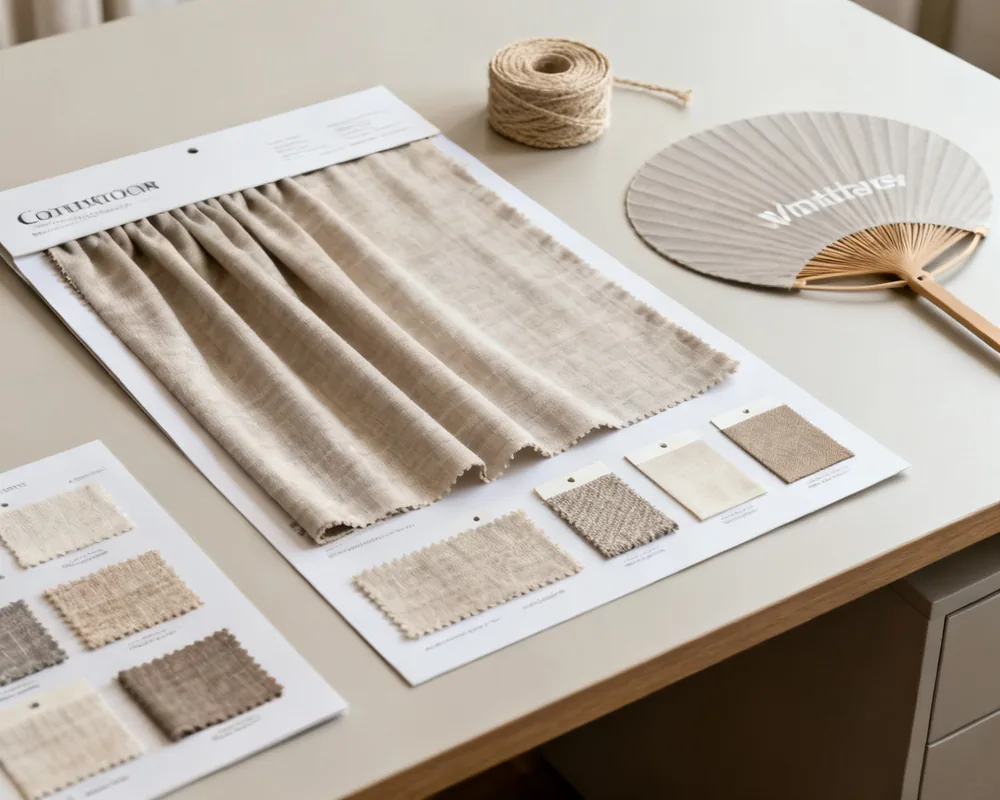
unbranded textile selection desk with curtain and upholstery sample cards

Fabric selection guide

Begin with the setting

Describe where the cloth will live before you narrow the JAB ANSTOETZ range. A south-facing living-room window, a bedroom sheer, a dining chair and a lounge seat each change the next question. Daily drawing, expected cleaning, daylight and the way a workroom will cut the piece all belong in that opening description. Asking for the nicest cloth leaves every construction looking similar on a screen.

Fabric selection guide — compare at least four dimensions
Dimension Review question Evidence or next step
Touch Composition alone is insufficient Review physical handle, yarn and weave construction
Care Maintenance can change suitability Describe steam, vacuuming or laundering for that piece
Exposure Different stresses need different evidence Separate light, abrasion and rubbing questions
Processing Assembly affects selection Discuss usable width, repeat, edges and joining

Handle the sample as information

Images can point at colour direction and at a visible slub or sheen. A physical sample carries drape, thickness and the way the face feels after you fold it twice. For a curtain, hold the cloth the way the heading will hold it and notice whether the fold collapses or stands. For upholstery, press the face with a thumb and see whether the yarn flattens into a shine. Write the construction and finish you think you are touching so the comparison answers one question, such as “will this linen-look weave stay crisp at a 2.1 fullness,” rather than a general liking.

GSM helps when it has a unit and a tolerance. It does not replace yarn count. Two cloths near 260 g/m² can differ because one uses a coarser weft and the other a tighter plain weave. Ask whether yarn linear density is stated in denier or dtex before anyone converts it. If a number is unknown, mark it unknown. Do not copy a neighbouring memo’s mass into the brief. A usable width near 140 cm can force a centre seam on a wide panel even when the ticket width looks larger.

Compare the construction, not one label

Fibre composition and mass describe useful parts of a textile. Weave or knit structure, yarn choice and finishing change the result you will live with. A jacquard drapery cloth can hide a float that snags on a track. A tight upholstery twill can feel harder at the seam than a looser decorative weave with a better abrasion coupon. Use several dimensions together. When a performance requirement is central, ask for the method and the specimen condition beside the figure. Colorfastness to light, abrasion resistance and seam slippage are not three ways of saying the same thing.

Shade needs its own line. A lab dip, a hanging memo and a production shade band answer different moments in a colour conversation. If two windows must match, say whether the match is in daylight. If two chairs must match a curtain, say that the viewing light includes both the window and the lamps, because those lights can pull a neutral in opposite directions.

Prepare a shortlist with tradeoffs

More than one cloth can be plausible. Put the priorities in the order the room actually uses them. A bedroom sheer may put privacy and a soft hand ahead of seating wear. A family dining chair may put abrasion and cleanability ahead of a dry linen crease. State what is still uncertain and what the next sample should settle: usable width for an unseamed panel, a shade under the real lamp, or a wear coupon for the arm. An explicit tradeoff gives the inquiry something to do. It does not invent a universal winner, a mill output figure or a certificate that was not supplied with the cloth.

Stock and custom colour are different paths. A stock colourway can be checked against a current shade band if that record is available for the lot. A custom colour is a development question with its own approval step. Mixing those paths in one sentence makes a later mismatch look like a quality failure when it was a briefing failure. Keep quantity and destination in the commercial line, and keep composition, construction, GSM, usable width and finish in the material line.

Discuss this material question