Colour and construction

JAB ANSTOETZ — Shortlist a curtain cloth with the room still in view

A hanging swatch can start a drape conversation. The agreed standard is the physical piece you approve for shade, handle and the width a workroom can actually cut.

Discuss your fabric requirements
  • Composition
  • Shade reference
  • Finish
  • Batch approval
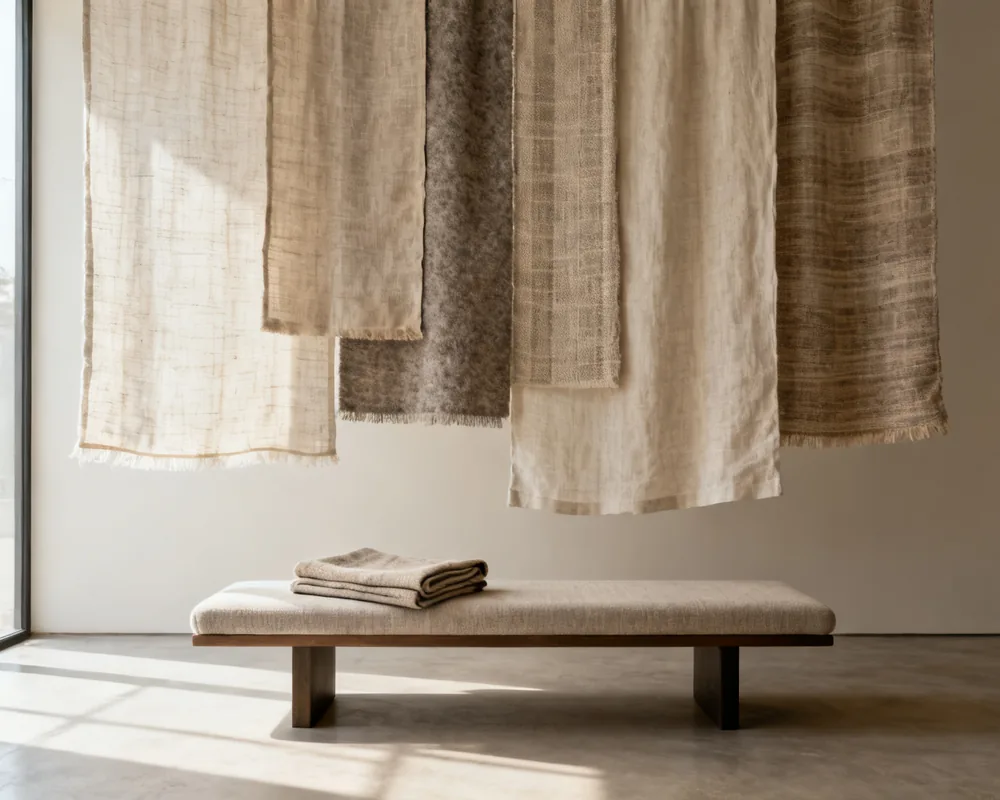
full-panel curtain colour library with large hanging woven swatches and a quiet upholstery fold
Colour on screen is an initial reference.

Fibre and finish decisions

Curtain cloth and seating cloth ask different questions of the same fibre name. A linen-look weave can hang well at a window and still pill on a chair arm. Read the four rows as a shortlist filter, not as a ranking of one cloth over another.

Selection tradeoffs for drapery and upholstery
Decision Look beyond What to clarify
Fibre A simple natural or synthetic ranking Moisture response at a window, touch on a seat, and the care the room will actually receive
Construction Composition alone Weave density, yarn count and whether the face is meant to drape or to take abrasion
Finish An unspecific performance label Whether a treatment is a handle finish, a soil-resist step, or something that must be rechecked after cleaning
Application An image of a finished room Daylight, seating contact, seam direction and the cuttable width the heading or cushion needs

Material scope

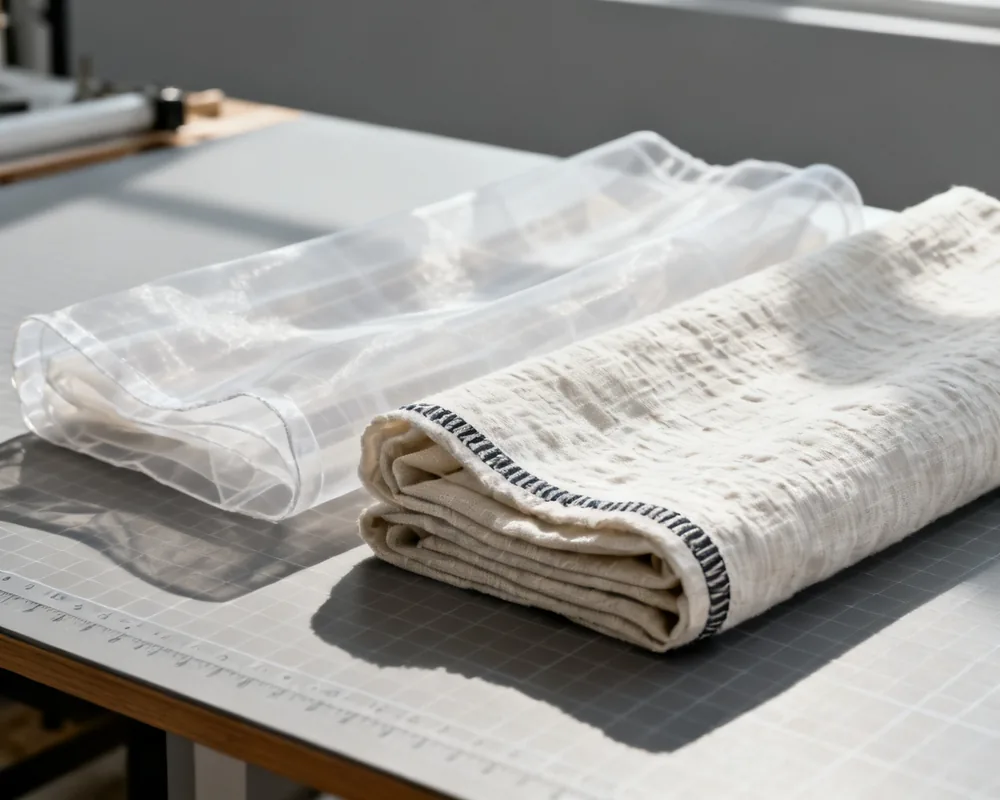
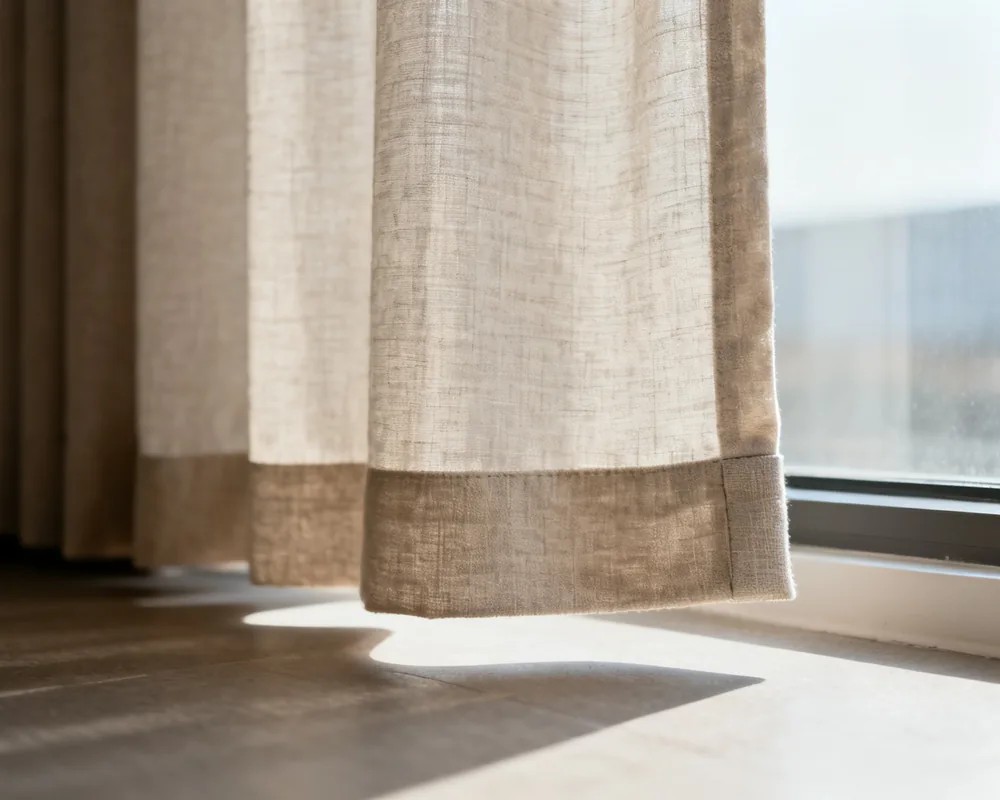
folded curtain weaves showing drape, slub and a sheer beside an opaque cloth

Curtain constructions

Start with how the cloth falls. Yarn size, weave openness and GSM change fullness, privacy and the way a hem behaves. Usable width decides whether a panel can be cut without a centre seam. A lining is a second cloth with its own composition, not a footnote on the face fabric.

View material scope
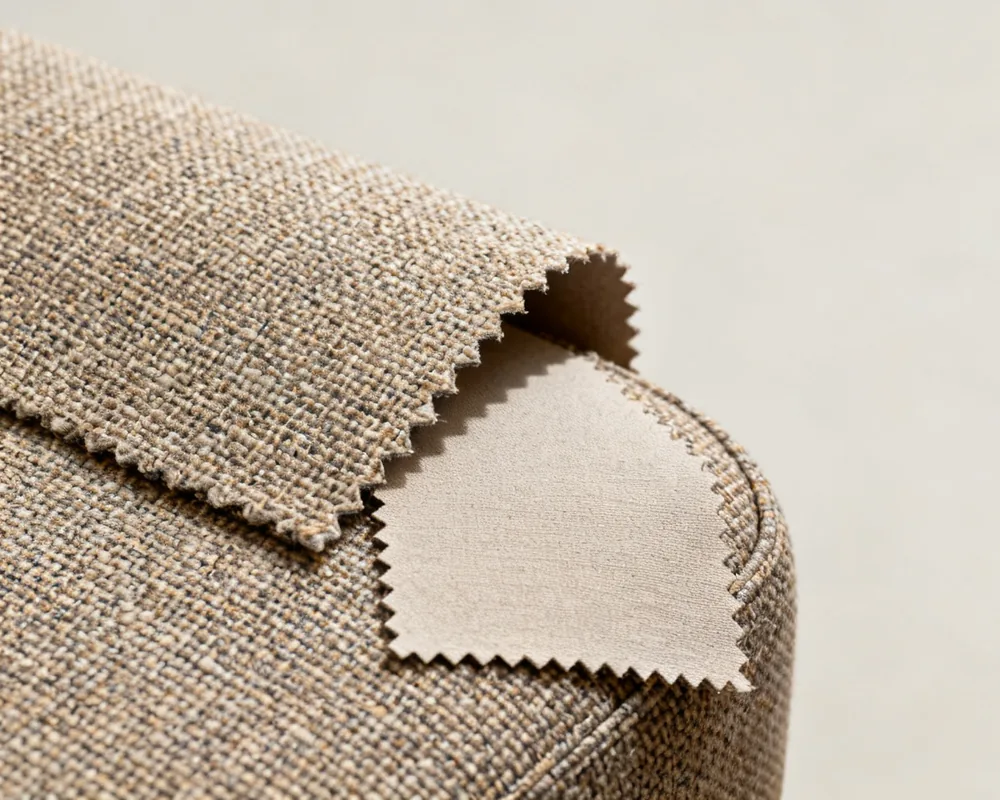
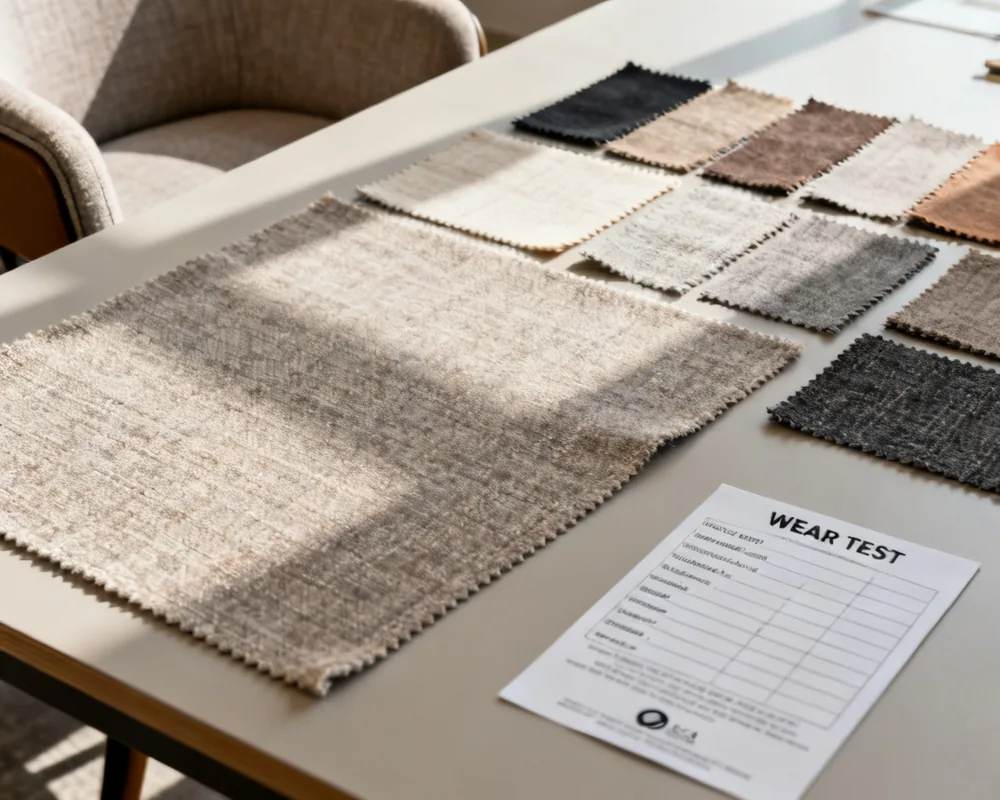
upholstery cloth samples showing weave face, edge and a backing discussion piece

Upholstery constructions

Seating cloth is judged by surface wear, seam slippage and how the face feels after a person sits, not by how it photographs in a drape. Ask which abrasion or pilling method applies, and keep that method next to the specimen state. A decorative weave can be right for a low-use bench and wrong for a daily chair.

View material scope

Match the application

curtain cloth held against daylight at an interior window

Window drapery

Review light, privacy and how often the panel will be drawn. Colorfastness to light matters here in a way that a closed cupboard cloth never sees.

upholstery swatches arranged for a seating review without a finished chair

Seating cloth

Name the contact: arms, seat deck or a loose cushion. Abrasion resistance and pilling describe different surface changes and should not be swapped.

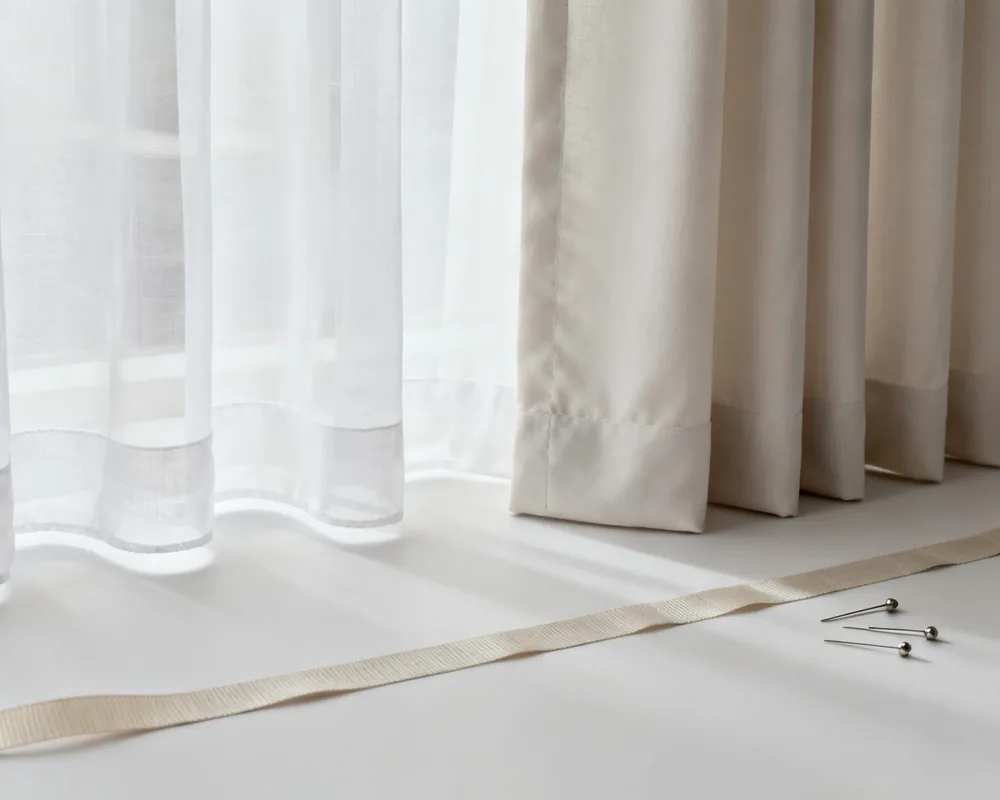
sheer and opaque curtain pair laid flat for a lining comparison

Sheer and lining pairs

A face cloth and its lining can shrink differently. Dimensional stability should be discussed for each layer before a hem length is treated as settled.

Method context
Sample context
Scope context

Fabric selection questions

Why is GSM not enough?

Mass per unit area does not define weave construction, handfeel or finish. A 280 g/m² drapery cloth and a 280 g/m² seating cloth can share a number and still differ in yarn count, float length and how a seam holds. Review GSM with a tolerance and with the construction, then ask which specimen the number came from.

How should I describe a sample?

Share a composition reference, the weave or knit structure, usable width and whether the piece is for a window or a seat. Add the shade reference you are matching, including whether it is a lab dip, a hanging memo or a previous cut. A screen photo can point at colour direction. It does not replace the physical approval.

Can test results be compared directly?

Compare them after the method, the specimen state and the scope are written down. Abrasion resistance, pilling, tear strength and colorfastness answer separate questions. A hydrostatic result is rarely the right evidence for an interior drapery cloth, and a lightfastness note does not describe seam slippage on a cushion.

Send one clear material brief

Composition · construction · GSM · usable width · finish

Discuss your fabric requirements