Material inquiry
JAB ANSTOETZ — Tell us what the fabric needs to do
A window, a seat, or both. Describe the cloth you can name and the decision that is still open. This header is a brief, not a showroom address.
Material inquiry
A window, a seat, or both. Describe the cloth you can name and the decision that is still open. This header is a brief, not a showroom address.
| Material | Composition and construction, plus whether the piece is drapery, sheer, lining or seating cloth. |
|---|---|
| Method | If a number matters, name the standard idea you care about, such as abrasion, pilling, lightfastness or dimensional change, and the specimen state. |
| Scope | Which result or requirement needs review: shade match, cuttable width, or how the face behaves after sitting. |
A telephone number, a postal address and opening hours are not listed, because they are not confirmed for this site. The form is the route for a project note. Social accounts are omitted for the same reason.
Write the room before the adjective. A bay window that needs privacy after dusk is a different cloth problem from a dining chair whose arms polish the face of the weave. If both are in the project, give them separate paragraphs so a lightfastness question is not answered with an abrasion coupon, and a seam-slippage worry is not answered with a drape photo.
For curtains, include the drop you are planning, whether a lining is a second cloth, and the heading that will load the upper edge of the panel. Usable width matters when you want to avoid a centre join: ask whether the cuttable width is closer to 140 cm or to a wider goods width, and keep that figure in centimetres. For seating, include the cut direction you expect, the pattern repeat if you can see one, and whether the memo in your hand still carries the finish you intend to approve. Name fibre composition, weave construction and GSM with its unit. A lab dip, a showroom hanging and a production shade band should be named as the objects they are. If abrasion resistance is in the note, ask for the method and the specimen state rather than a bare pass word. Pilling, seam slippage and colorfastness stay as separate lines.
Quantity can be a metre estimate or a roll count. Put it beside the destination city or country so the reply can talk about the same shipment conversation. Leave timing as a requested window rather than a date you have already treated as agreed. If a previous fault matters, such as a barre across a sheer or a shine on a cushion front, describe it. Unknown GSM, yarn count and test methods can stay blank. Guessed numbers create a later argument that the cloth changed when the brief was the thing that moved.
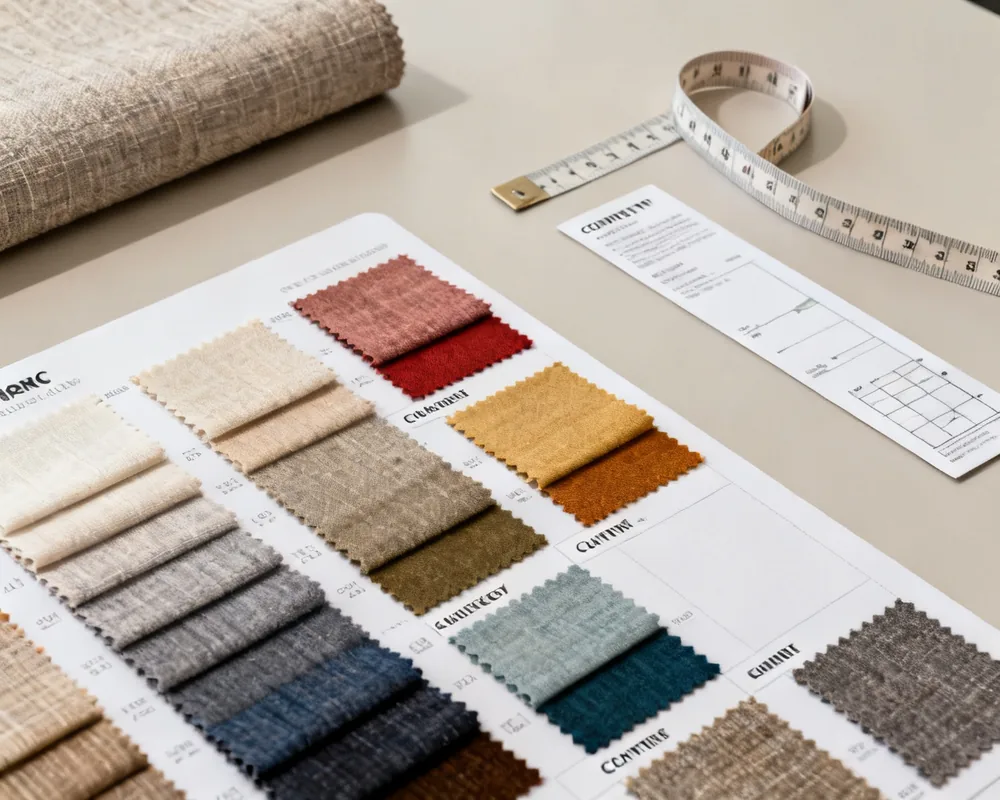
Separate a target requirement from a reported result. A wished-for GSM is not the same field as a measured mass on a named specimen. Use the message box for fibre composition, weave or knit, finish, shade reference and the decision you need next. The compact dialog elsewhere on the site is a short ask from a catalogue card. This page is the longer desk: the table above sets the fields, and the form below carries the actual note.